
Do not start with a model.
Start with the decision.
Before you buy GPUs, pick a checkpoint, or build an agent, TensorWard determines what private AI should actually look like for your company.
VIEW THE AI READINESS AUDITAI footprint
Current models, APIs, workloads, vendors, and internal AI usage.
Data boundary
What can leave, what cannot, and where regulated or sensitive data lives.
Infrastructure
Existing GPUs, servers, cloud capacity, networks, and operational constraints.
Workload
Use cases, concurrency, context, latency, quality, and availability targets.
Economics
Owned hardware vs private cloud vs hybrid, including utilization and growth.
Roadmap
Model shortlist, architecture, benchmark plan, pilot scope, and next decision.
From uncertainty to an operating system.
The model is one layer. The business outcome comes from engineering the entire path around it.
Bring us the constraint.
Data cannot leave
Sensitive, proprietary, regulated, or export-controlled workloads make public API paths unacceptable.
You own GPUs
You have hardware but no defensible model, quantization, or serving strategy.
Local AI is too slow
The model runs, but latency, throughput, memory, or quality misses production needs.
Buy vs cloud is unclear
You need workload-based economics before committing to GPU capital or recurring cloud spend.
The demo must become a platform
You need authentication, capacity, observability, failure behavior, upgrades, and ownership.
Agents need real authority
You want tool-using AI with explicit permissions, approvals, auditability, and evaluation.
Fit. Run. Act.
Make the model fit.
Hardware-aware model selection, quantization, compression, conversion, and quality validation against the workload that matters.
Make it perform.
Production private serving across on-prem, private cloud, hybrid, and air-gapped environments, from one GPU to multi-node.
Make it useful.
Tool-enabled private agents with identity, permissions, human approval, evaluation, logging, and controlled enterprise integration.
Architecture review, hardware strategy, cost/performance analysis, model refreshes, runtime upgrades, and continuing support.
Proof before promises.
Public lab work with hardware, methodology, limitations, and repeatable measurements. Client work is published only when appropriate and authorized.
Making Large Models Fit Smaller Hardware
A 27B checkpoint across Turing, Ada, and DGX Spark: memory fit, quantization, serving stack, throughput, and quality.
Serving a 307 GiB Model on Hardware You Own
Multi-node private inference across DGX Spark and H200, including tensor parallelism, runtime fixes, graph mode, speculative decoding, and capacity tradeoffs.
Private AI for Regulated Environments
A future architecture study on trust boundaries, data flow, identity, updates, and operations in tightly controlled environments.
Audit → Pilot → Production → Care.
A bounded path from technical decision to a system your team can operate.
Audit
1–2 weeks. Map the footprint, constraints, architecture options, and pilot plan.
Fixed-scope engagementSEE DELIVERABLES →Pilot
4–8 weeks. Prove one representative private AI workload on a production-minded foundation.
Scoped after the AuditProduction
Harden deployment, identity, capacity, observability, automation, runbooks, and acceptance criteria.
Custom scopeCare
Keep models, runtimes, capacity, and operating practices current after launch.
Ongoing engineering support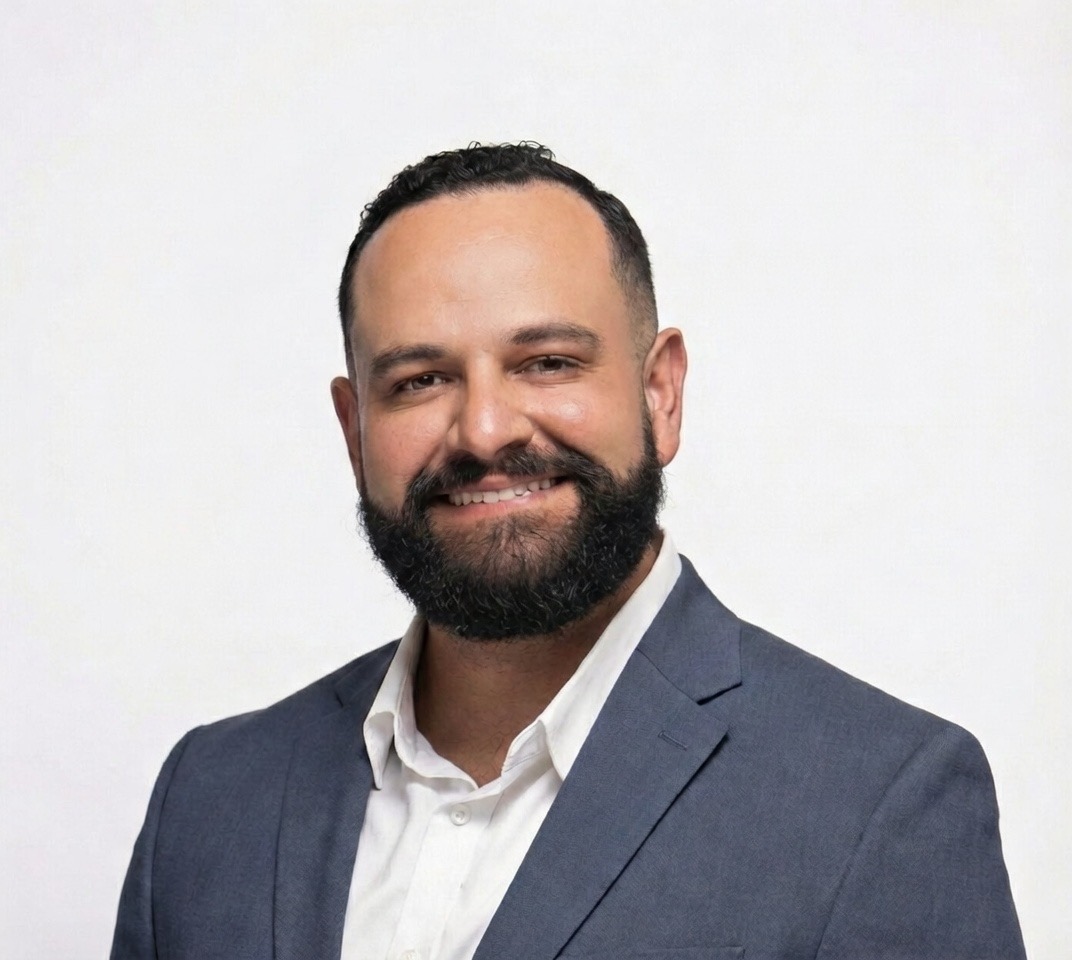
Infrastructure depth.
Independent judgment.
TensorWard is founded by Victor Cruz, an infrastructure and AI engineer with professional experience across private AI, regulated cloud, platform engineering, mission-critical systems, model optimization, and GPU inference.
That production experience informs TensorWard’s methodology. The public technical work on this site is separate, reproducible lab work that can be independently inspected and rerun.